Book Making, General, Printing

Challenges, challenges – 5th October 2020

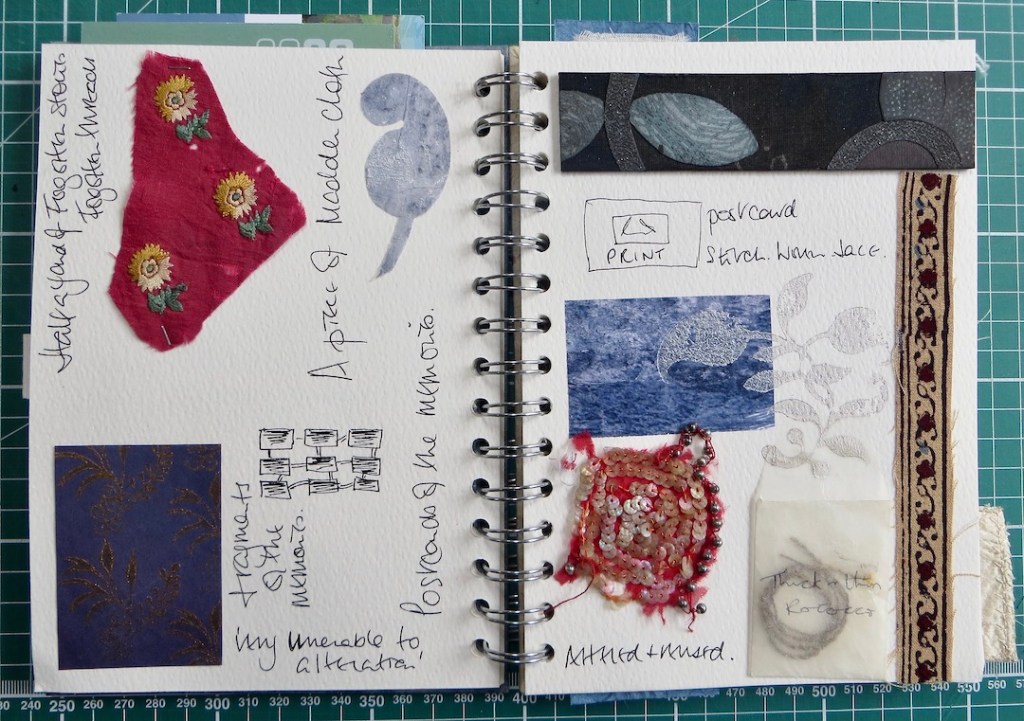
This is an image of the last double page in my notebook – I complete one a year and this is my 28th! I realised that normally by this time of the year I would be wondering if I would run out of pages, but not so this year, there are no exhibition flyers, no artists’ business cards, no holiday photographs, fewer bits cut from magazines and fewer doodles.

It will get better. 

I started these notebooks when I was teaching embroidery and I found that adults were intimidated by the idea of sketchbooks, which an art student would quickly come to terms with. But a notebook where anything and everything could just be stuck into and so information could easily be extracted was not intimidating.

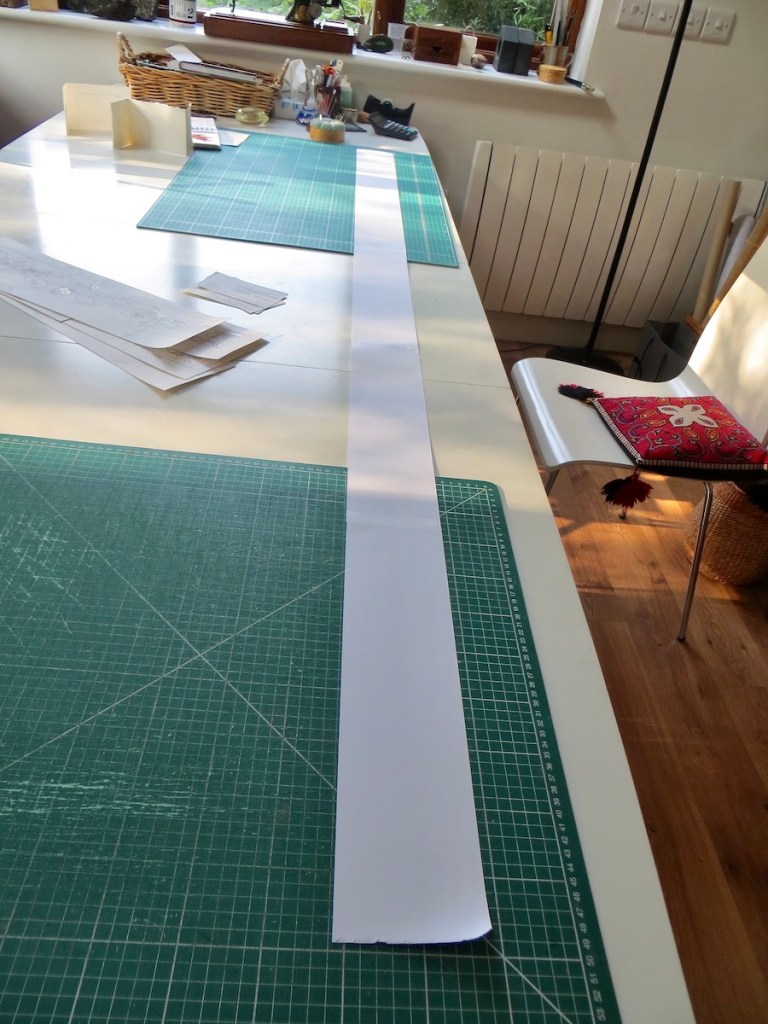
Two weeks ago I set myself the challenge of two yards (1.83m) of memories and decisions had to be made.

My favourite book making papers didn’t come long enough

My etching press will only produce a 0.75m print

A simple concertina of that length would be very floppy.

So I laid out 2 yards on my desk and considered the scale of the problem
I played about with various formats

And settled on this one, 2 yards made up of 7 sections
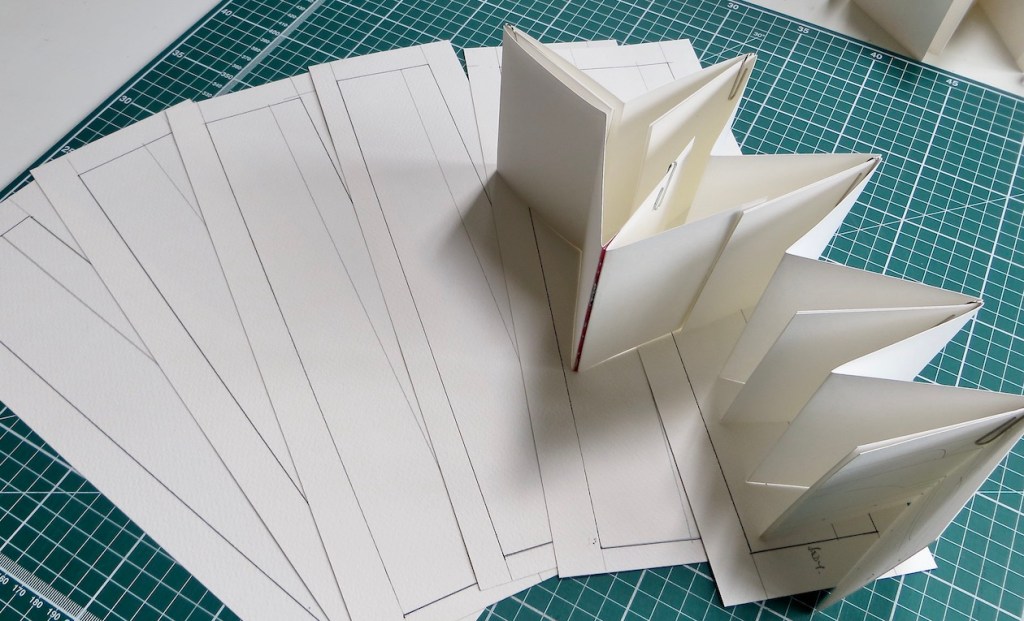
Drew the correct sizes out ( one piece will be cut into 2 at the end) and began to draw.
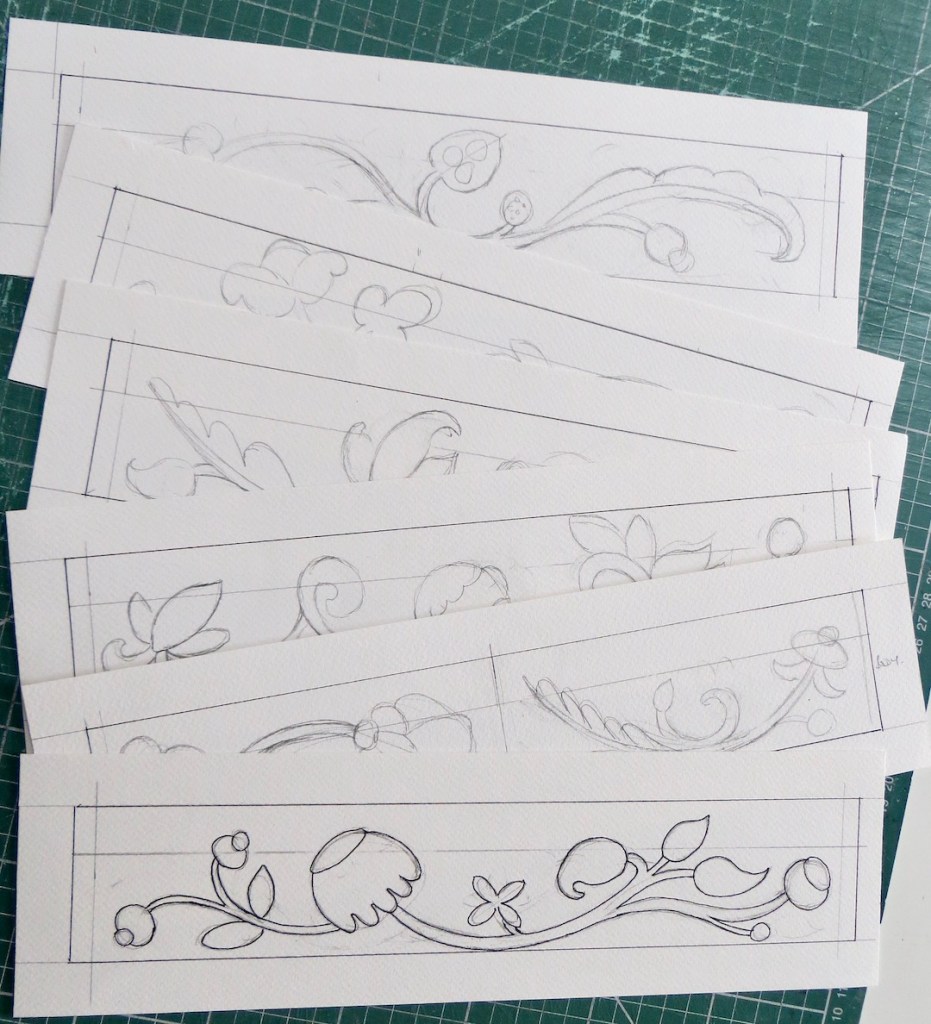
Began to construct the plates

And this is the progress that I made, 2 yards of Collagraph plates takes a while!

Book Making, General, Printing, Uncategorized

Seeing it Through – 21st September 2020

My “Half a Yard of Memories” series is coming to an end, this I’ve decided will be the last one and it focuses on Print. I am viewing the sections of my collection of antique textiles as lace, woven, stitch and now print. Next time I look at the idea of my collection there will probably be a different list of categories, a different angle.

“Half a yard” poses challenges, the book has to be a certain length and that limits the design. A yard is linear and seen all at once. It seems to me that variations of the concertina book format is the way to go and it is no different for the last design.

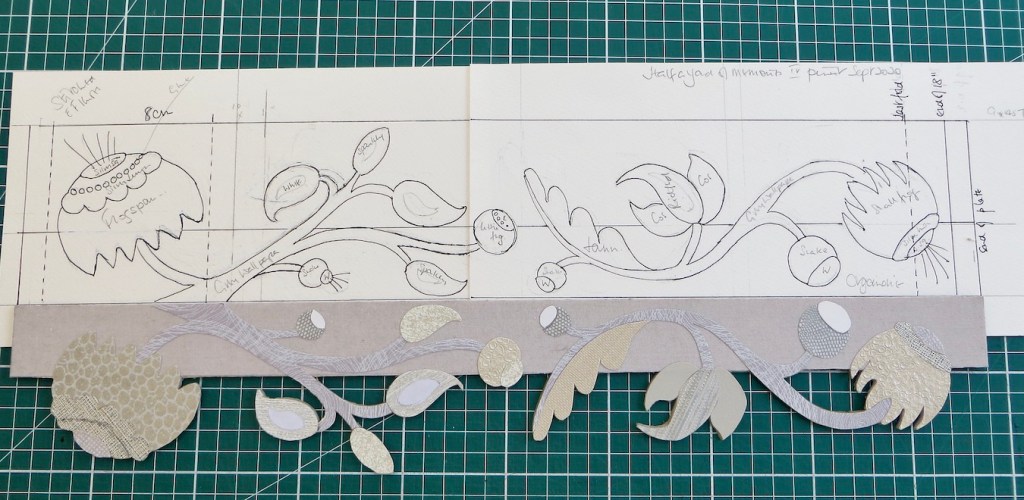
Print design and the Collagraph plate

The completed cut out plate

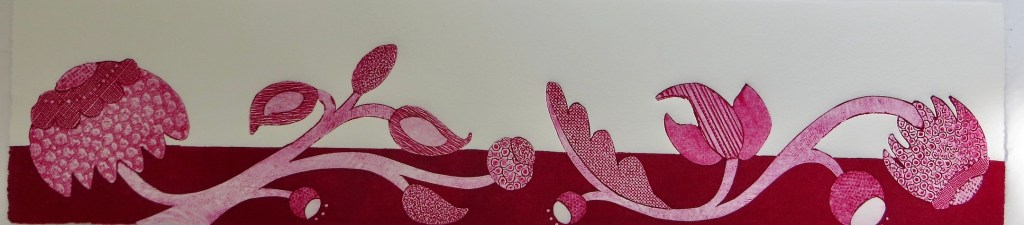
The print. It took several attempts to get the right shade of red, I wanted it different from my Christmas card red!. Now waiting for them to dry. An edition of 2.

Then I started playing about with the small wooden letters that I use to emboss into paper.

I had wondered what was next – and then it came in a flash – I have “two yards of memories”. Now that will take some working out!

Book Making, General, Printing

Research – 7th September 2020

I have begun to think about another in the series ‘Half a yard of Memories”  I hadn’t thought that i would do more but a larger project started to emerge and it depended on me expanding on the subjects of lace, woven and stitch which were the subjects in the last few books and so I have now embarked on print.

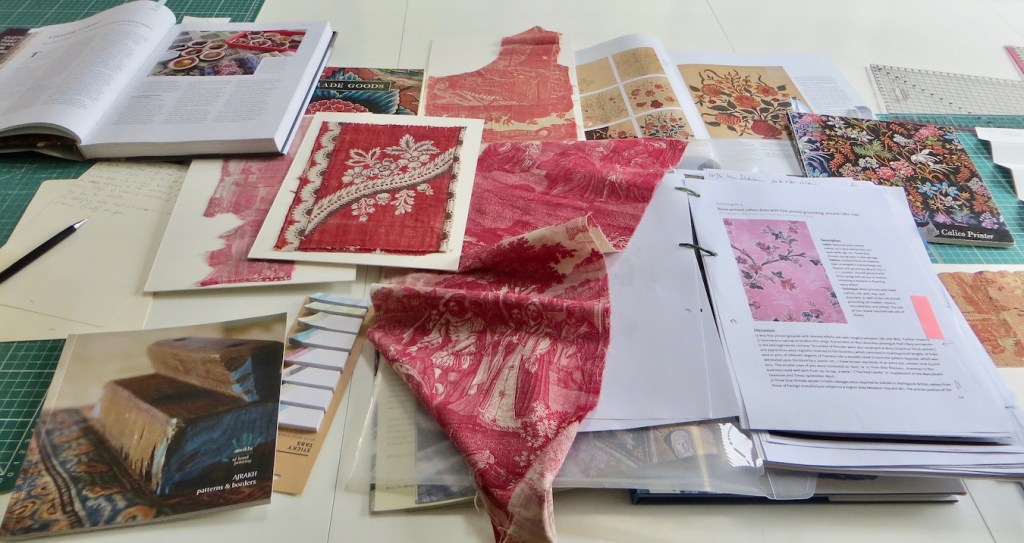
I spread out relevant books and sample fragments and meandered around the pieces, took notes and thought! 

I settled upon Madder.

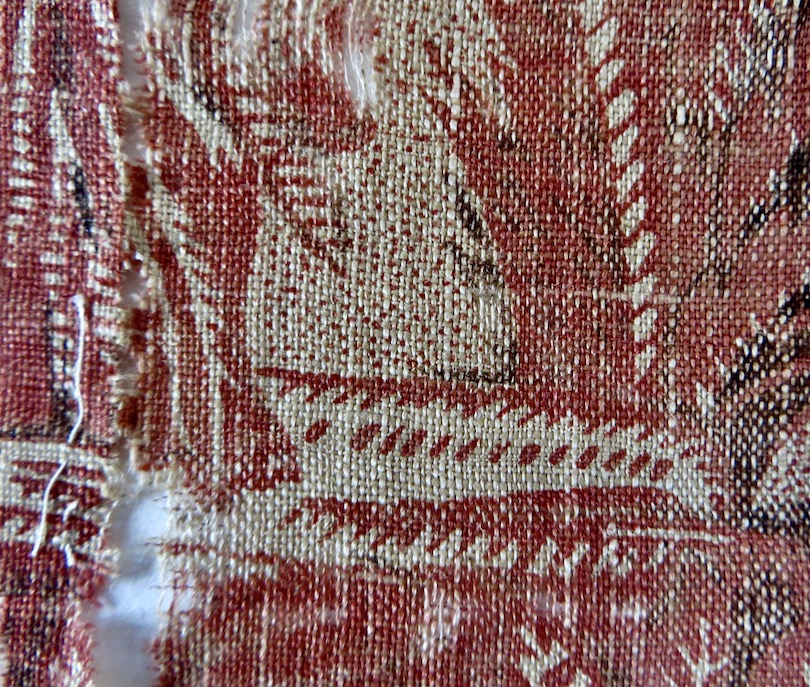
Briefly – Madder is the red dye from the Chay root, but when we see printed fabrics like the ones shown they have not been printed with madder they have been printed with mordants and are then submerged into a dye bath with the madder dye. A mordant is a compound which allows the dye to penetrate and fix onto the fabric and to make it colourfast. India had perfected this technique and it is what made the fabrics imported into Europe in the C17th so brilliant. However the methods to colour the cotton was long and complicated. There were several washing, bleaching ( with cow or camel dung!) and drying stages and different mordants gave different colours, alum for pinks through to reds and iron mordants for violets through to blacks.

Whilst I am familiar with my textile fragments and the contents of my books, going through the source material again is really searching for a story that I haven’t explored before and that will I feel give my finished piece greater validity and depth of meaning.

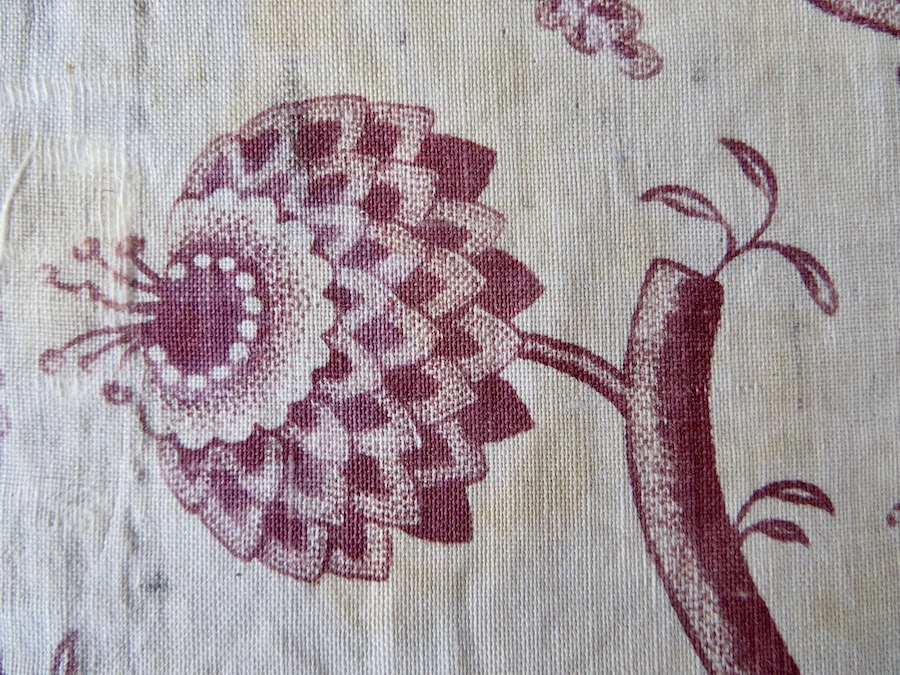
Detailed printing to a finely woven cotton

Good quality print to cotton, probably mid C18th, Mary Stuart revival, the character are wearing tartan and she is escaping with a casket marked with a heart. The fragment has been reused and the queens head is horizontal underneath the arm pit as a lining.

Poor quality printing to roughly woven fabric. They wouldn’t have wasted good printing onto poor quality fabric.

Late C18th fine cotton with quality printing showing stories of a Biblical or historical nature

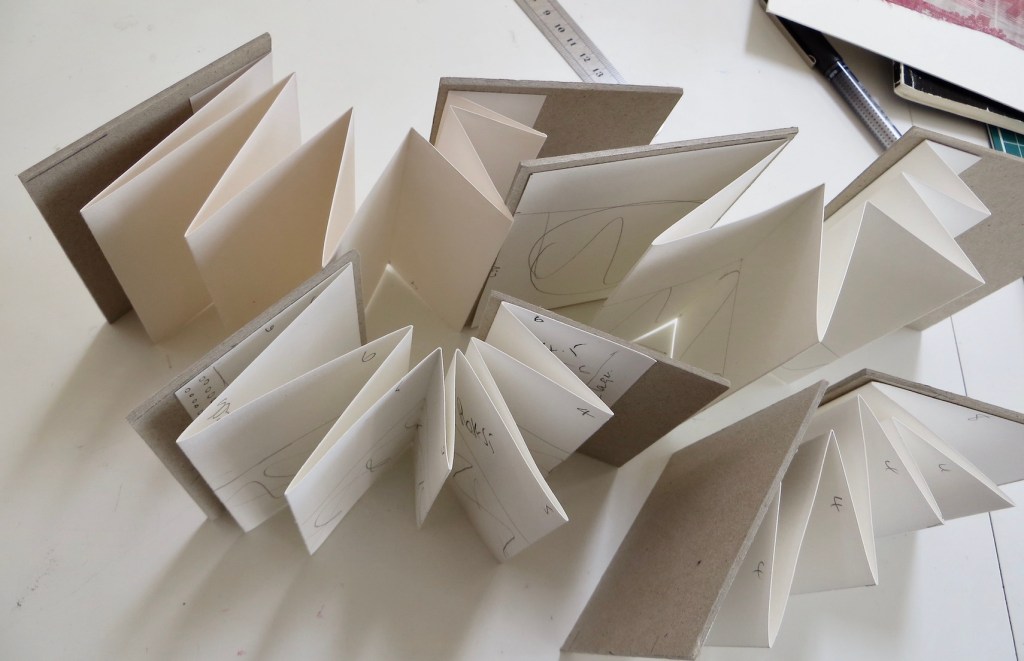
Trying out some folded styles all 18 inches long

On a practical note – I did print out my Christmas cards!